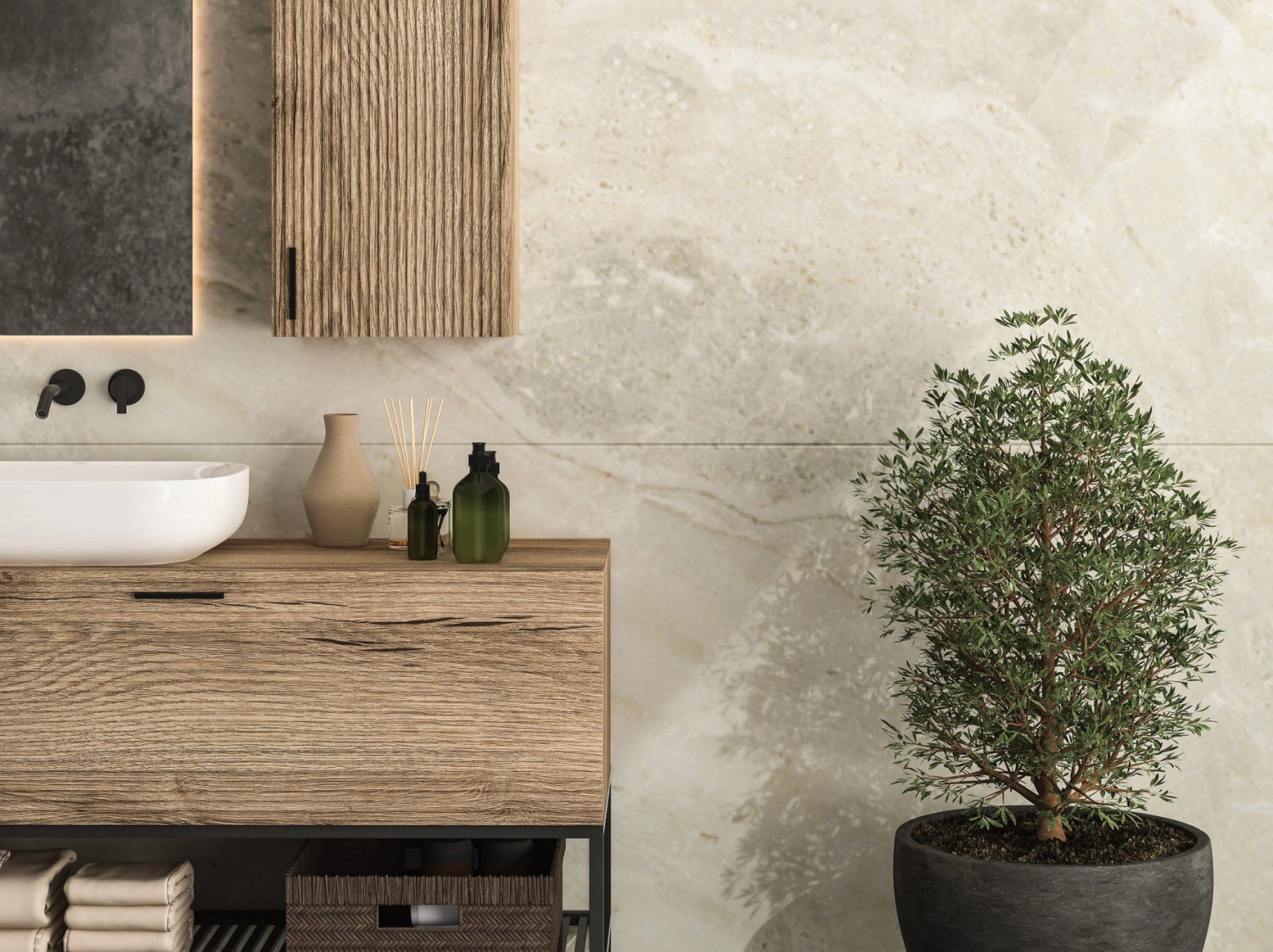
Wood, stone, or marble imitation materials promise to deliver elegant interiors without the hefty price tag of the genuine, natural thing. However, the results sometimes fall short of expectations.
Achieving a harmonious decor depends on various factors. Read on to learn more.
Focus on Realistic Colours and Patterns
A synthetic material’s ability to deceive the eye depends on a number of factors.
Especially when it comes to vinyl—there’s a lot of poor-quality wood or stone replica flooring that looks as cheap as they are. Some laminate countertops that are designed to mimic high-end materials can also look pretty fake.
A few details can help ensure a more authentic result:
- Pattern variations: opt for a product with random pattern repetitions.
- Finishes: choose a texture and sheen level that match the real material. Excessively glossy wood, for example, looks unnatural.
- Colours: avoid overly strong contrasts or colours that don’t create the desired effect.
- Veins and gradation: make sure they vary enough to replicate the natural material.
- Knots (in wood): they shouldn’t be uniform (in terms of colour, size and shape).
Here’s a tip: it’s a good idea, when possible, to compare several samples or examine photographs of the material installed in a completed room.
Select a Quality Material
Not all synthetic materials are created equal and aesthetics alone shouldn’t be the sole determining factor. It’s also important to think about:
- durability;
- maintenance;
- location (where the materials are installed influences how quickly they may deteriorate).
Wood imitation flooring:
- Vinyl can replicate various wood tones and patterns. How well it withstands moisture, scratches, and general wear and tear varies depending on the product. Keep these characteristics in mind when considering vinyl for a kitchen or entryway.
- Ceramic tiles can duplicate wood’s grain and colours with the advantage of a water-resistant surface. They’re well suited to bathrooms or entryways, but they tend to feel colder and harder underfoot.
Stone imitation countertops:
- Ceramic or porcelain tiles can mimic the look of natural stone. Either option, each with its own maintenance requirements, makes it possible to achieve different visual effects.
- Some laminate countertops can recreate the veining and colour variations of natural stone at a lower cost. But how well they withstand heat, scratches, and water depends on the product.
Stone imitation wall panels:
- Decorative panels or porcelain tiles can replicate the appearance of brick, concrete, or natural stone. Since these surfaces rarely see much daily contact or wear and tear, their durability may not be a significant factor when comparing materials.
Don’t Combine Multiple Imitation Materials
A room can feel disjointed when several materials featuring bold patterns compete with one another, such as a very unique faux-wood floor, a richly veined countertop, and a wall covered in contrasting stonelike panels.
It’s advisable to focus on one statement material and round out the decor with more understated surfaces for a cohesive result. The aim is to balance textures, colours, and patterns without everything appearing overly uniform.
Choose a Synthetic Alternative That Complements the Property’s Style
It’s also worth bearing the house’s style and other original features in mind when choosing a material.
- In a traditional home: opt for imitation materials in natural colours and with relatively subtle patterns, which blend in with the existing architectural elements.
- In a contemporary-style interior: focus on large surfaces, clean lines, and more uniform patterns to create a cohesive interior design.
- In a small room: prioritize simpler patterns and carefully coordinated colours to avoid visually overwhelming the space.
- In an already richly textured decor: choose more understated imitation materials to ensure a balanced look.
Pay Attention to the Finishing Touches
Don’t forget the mouldings, edgings, seams, and transitions between surfaces!
Seams are particularly important for imitation marble countertops, as the veining can highlight imperfections. Finally, natural and artificial lighting each influences how the eye perceives colours and gloss: this is why a sample viewed in-store can look completely different at home.